Games / Resident Evil
Resident Evil Games in Order: Release, Timeline and DLC
Choose a Resident Evil starting game, then follow release or story order. Place remakes and story DLC without playing every version twice.
For a first Resident Evil story run, start with Resident Evil, then Resident Evil 2 and 3. Want a shorter introduction? Resident Evil 7 → Village follows Ethan across two games. RE0 comes first in the timeline, but that does not make it compulsory homework: choose a starting route below, then use the release list or chronology when you want the wider picture.
Which Resident Evil game should you play first?
| Your goal | Start here | What to expect |
|---|---|---|
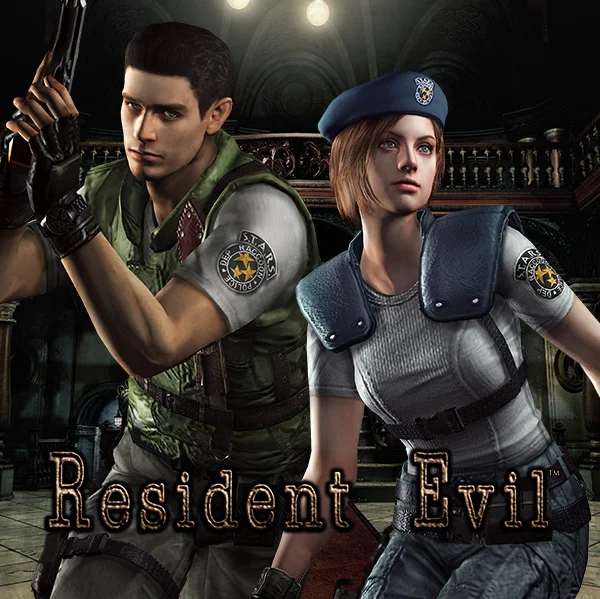
| Classic story through remakes | Resident Evil HD Remaster → RE2 (2019) → RE3 (2020) | The mansion, then Raccoon City. HD Remaster uses fixed camera angles; the later remakes switch to an over-the-shoulder view. |
| A connected two-game story | Resident Evil 7 → Village | Follow Ethan without first working through the older cast. Earlier series references are background, not a reason to postpone starting. |
| The latest mainline entry | Requiem | Grace gives newcomers a way in. Leon’s history adds context, but the director says older games are not required. |
| Explore the whole main story | The longer route below | More character background and changing play styles, at the cost of a much longer commitment. |
A longer, release-based story route
The longer route starts with the Mansion Incident before its prequel, and introduces Claire and Leon before their later adventures.
- Resident Evil — the 1996 original or the 2002 remake, also available as HD Remaster
- Resident Evil 2 — the 1998 original or the 2019 remake
- Resident Evil 3 — Nemesis (1999) or the 2020 remake
- Resident Evil – Code: Veronica, or Code: Veronica X
- Resident Evil 0
- Resident Evil 4 — the 2005 original or the 2023 remake
- Resident Evil 5
- Resident Evil Revelations
- Resident Evil 6
- Resident Evil Revelations 2
- Resident Evil 7 biohazard
- Resident Evil Village
- Resident Evil Requiem
You can leave the two Revelations games for later if you want a shorter route. Keep Code: Veronica for Claire and Chris’s continuing story; its unnumbered title does not make it a multiplayer extra.
Resident Evil games in release order
The table gives the first release year for these story games and their full remakes. It does not add a new row for every HD remaster, port, Gold Edition, bonus mode or DLC episode. For Revelations 2, 2015 is the year its episodic release began.
| Year | Game | Release type |
|---|---|---|
| 1996 | Resident Evil | Original |
| 1998 | Resident Evil 2 | Original |
| 1999 | Resident Evil 3: Nemesis | Original |
| 2000 | Resident Evil – Code: Veronica | Original; Code: Veronica X followed in 2001 |
| 2002 | Resident Evil | Remake of the 1996 game |
| 2002 | Resident Evil 0 | Prequel; first released after the remake |
| 2005 | Resident Evil 4 | Original |
| 2009 | Resident Evil 5 | New story |
| 2012 | Resident Evil Revelations | Original Nintendo 3DS release, before the 2013 HD version |
| 2012 | Resident Evil 6 | New story |
| 2015 | Resident Evil Revelations 2 | New episodic story |
| 2017 | Resident Evil 7 biohazard | Seventh numbered entry |
| 2019 | Resident Evil 2 | Remake |
| 2020 | Resident Evil 3 | Remake |
| 2021 | Resident Evil Village | Eighth numbered entry |
| 2023 | Resident Evil 4 | Remake |
| 2026 | Resident Evil Requiem | Ninth mainline entry; released February 27, 2026 |
The table records release history; the first-run list suggests a play order. The list lets you substitute a remake in the original story’s position, while the table records each remake’s actual release year.
Resident Evil Requiem — Launch Trailer
Video: Resident Evil / Capcom
Horror, graphic violence and story reveals in the Requiem trailer.
Resident Evil games in chronological order
Follow this order for the main incidents, leaving flashbacks, epilogues and DLC chapters with their respective games. Requiem returns to present-day Raccoon City, rather than revisiting the 1998 incident; its broad setting is listed without assigning an exact calendar year.
| Story period | Game | Order note |
|---|---|---|
| July 1998, before the Mansion Incident | Resident Evil 0 | The prequel goes first in chronology, but not in release order. |
| July 1998 | Resident Evil / its remake | The Mansion Incident. |
| September 1998, overlapping | Resident Evil 3 and Resident Evil 2 / their remakes | RE3 begins on September 28; RE2 begins on September 29. Their incidents overlap. |
| December 1998 | Code: Veronica / Code: Veronica X | Claire’s search continues after Raccoon City. |
| Autumn 2004 | Resident Evil 4 / its remake | Leon’s later mission. |
| 2005 | Resident Evil Revelations | Between Resident Evil 4 and 5. |
| 2009 | Resident Evil 5 | After Revelations. |
| 2011 | Resident Evil Revelations 2 | Before the main events of Resident Evil 6. |
| 2013, main incident | Resident Evil 6 | The campaigns span multiple events; this is not a scene-by-scene timestamp. |
| 2017 | Resident Evil 7 biohazard | The start of Ethan’s two-game story. |
| 2021 | Resident Evil Village | Ethan’s next main adventure. |
| Present-day Raccoon City | Resident Evil Requiem | Leon’s later return, following his earlier adventures; the director describes a present-day setting without giving an exact year in the interview. |
Capcom’s Resident Evil history separates game chronology from release dates and from the live-action films. The story dates above describe the games, not a combined order for every adaptation.
Should Resident Evil 2 or 3 come first?
For a first playthrough, finish Resident Evil 2 and then play Resident Evil 3. That keeps the original release sequence and avoids interrupting either campaign. For a timeline chart, place them together: RE3 starts earlier, but it is not simply an entire prequel that finishes before RE2 begins.
Should you start with Resident Evil 0?
Start with 0 if your specific aim is to follow the earliest main incident first. Start with Resident Evil if you want the series’ first story before learning its prehistory. The number zero describes where the prequel fits, not a prerequisite imposed on every new player.
Where the remakes and remasters belong
You do not need to play both versions of every story to use the routes above. Choose one for the main run, then return to the other if you want to compare how that story was adapted. “Same story position” does not mean every scene, location or character detail is identical.
| Name on the game | What it is | Where to put it |
|---|---|---|
| Resident Evil HD Remaster | A remaster of the 2002 remake, not the untouched 1996 PlayStation game | The Resident Evil story slot |
| Resident Evil 0 HD Remaster | An updated edition of the 2002 prequel | The Resident Evil 0 slot |
| Resident Evil 2 (2019) | Remake of Resident Evil 2 (1998) | The RE2 slot |
| Resident Evil 3 (2020) | Remake of Resident Evil 3: Nemesis (1999) | The RE3 slot |
| Resident Evil 4 (2023) | Remake of Resident Evil 4 (2005), not its older HD port | The RE4 slot |
| Code: Veronica X | The expanded edition of Code: Veronica | The Code: Veronica slot; it is not the announced Veronica remake |
Where do Outbreak, Chronicles and DLC fit?
Outbreak and Outbreak File 2 show other people caught in Raccoon City in September 1998. They are optional additions alongside the RE2–RE3 period, not numbered sequels to insert after Village.
The Darkside Chronicles and The Umbrella Chronicles combine retellings with additional story material. Capcom gives them broad story ranges of 1998–2002 and 1998–2003 respectively. Treating either compilation as one entirely new incident between two numbered games would hide that overlap. Use them after the earlier stories if you want those additional perspectives.
The tables focus on the story games and remakes listed above, not every side game, competitive multiplayer release, mobile title or film. Gold editions bundle a game with extra content; they do not add another numbered entry to the story order.
Story DLC for RE4, RE7 and Village
Finish the relevant base campaign first, then use the order below. This is a spoiler-conscious viewing/play sequence, not a claim that every DLC scene happens afterward.
| Base game | What to add next | What you need |
|---|---|---|
| Resident Evil 4 (2023) | Separate Ways | The remake and this paid expansion; included in Gold. |
| Resident Evil 7 biohazard | Not a Hero → End of Zoe | Not a Hero is free with the base-game requirement. End of Zoe is paid, or included in Gold / the Season Pass. |
| Resident Evil Village | Shadows of Rose | Winters’ Expansion, included in Gold; this is not a VR campaign. |
For the exact bundle contents, compare RE4 Gold, RE7 Gold or Village Gold. Banned Footage challenges and the Mercenaries modes are not additional numbered games.
Requiem is released; Veronica is upcoming
Resident Evil Requiem launched on February 27, 2026, and belongs at the end of the release-based route. It stars Grace Ashcroft and Leon S. Kennedy, bringing the story back to the legacy of Raccoon City.
Do you need the older games before Requiem?
No. In PlayStation’s interview with director Koshi Nakanishi, he explains that Requiem was designed for complete newcomers, with Grace providing a new character to follow. He describes Leon returning to present-day Raccoon City after his earlier adventures, rather than the game retelling his first visit.
For Leon’s earlier Raccoon City background, play Resident Evil 2. Choose the longer series route only if you want that broader history before Requiem.
Capcom has announced Resident Evil Veronica for 2027 as a remake of Code: Veronica. As of September 9, 2026, that is an upcoming release, not another completed game in the list. Code: Veronica and Code: Veronica X remain the existing versions named in this guide’s story route; do not confuse either with the new remake announcement.
What do you think?
0 Responses
Choose a reaction. Tap it again to undo.
Keep reading